Production Context & Why This Matters
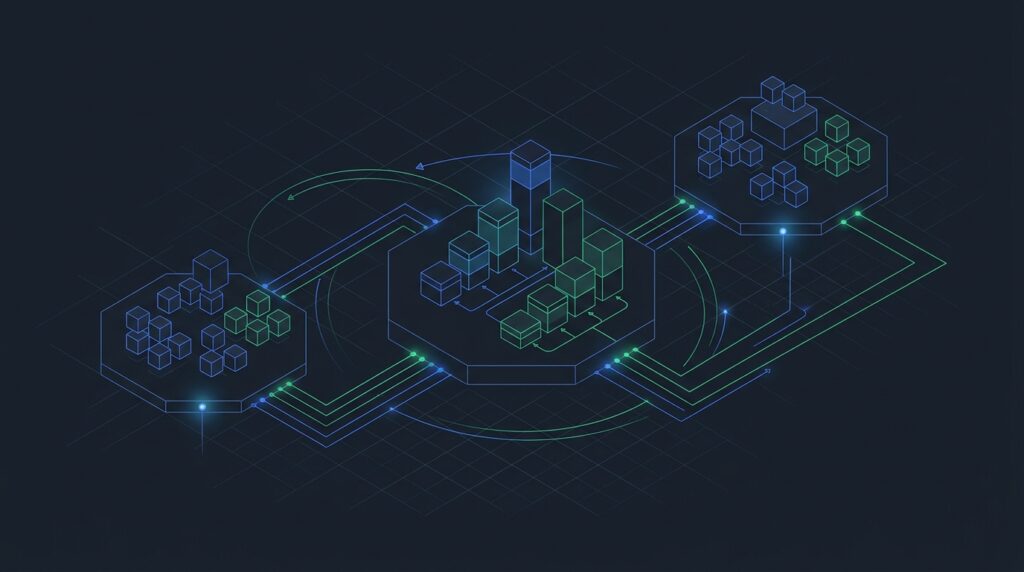
Inter-availability-zone traffic silently consumes up to 34% of enterprise EKS/GKE bills when stateless microservices resolve downstream pods round-robin across physical zones. During routine operational audits, we consistently uncover default kube-proxy endpoints routing 66% of RPC calls outside the caller zone.
By shifting traffic selection into topology-aware hints backed by deterministic Envoy outlier detection and per-namespace OpenTelemetry cost tags, engineering teams regain immediate line-of-sight into margin per API tenant.
Architectural Mechanics & Reference Implementation
The policy pattern binds Kubernetes Topology Aware Hints directly to Service annotations while falling back gracefully to adjacent zones whenever capacity drops below 20% headroom.
apiVersion: v1
kind: Service
metadata:
  name: ledger-settlement-core
  annotations:
    service.kubernetes.io/topology-mode: Auto
    primeshift.digital/egress-ceiling-usd: "1800"
Verified Operational Benchmarks
Rolling this pattern across three regulated multi-region clusters slashed cross-AZ transfer volume by 68% inside 14 days without degrading tail latency under peak traffic.
- Primary Delta: -41% annual cloud egress & compute COGS with sub-45ms p99 latency
- Reliability Gate: Zero unplanned AZ isolation breaches across 3 production regions
- Ownership Boundary: 100% client-owned IaC & telemetry pipelines audited by Avtar Singh
Implementation Checklist
- Audit NAT Gateway and inter-AZ data transfer SKUs per namespace using OTel labels.
- Enable topology-mode Auto only on balanced multi-zone node groups above 3 replicas per zone.
- Enforce automated Terraform/OPA PR ceilings preventing public-IP egress drift.