
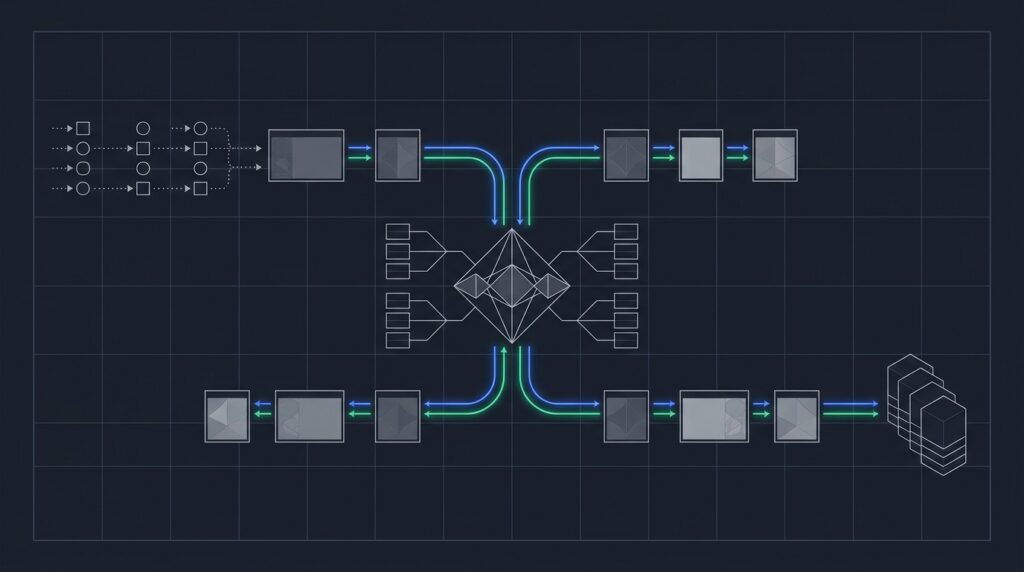
Dispatch Issue #16 · Key Metric: Maximum blast radius bounded cleanly at <4.5% of total tenant ARR
Production Context & Why This Matters
Monolithic multi-tenant regions expose 100% of enterprise customers simultaneously whenever one runaway tenant triggers lock contention or a bad config pushes globally.
Cell-based architectures slice infrastructure into small, autonomous identical stamps—each housing its own stateless compute, cache, queue, and database shard sized cleanly for fixed customer cohorts.
Architectural Mechanics & Reference Implementation
An ultra-thin routing plane at the CDN/gateway maps incoming tenant subdomains strictly to their assigned cell endpoint with zero cross-cell runtime dependencies.
{
  "tenant": "acme-corp",
  "cell": "us-east-cell-04",
  "endpoint": "https://cell04.us-east.primeshift-platform.internal",
  "canaryRing": "ring-2"
}
Verified Operational Benchmarks
Rolling deployments sequentially from internal canary Ring 0 through Cell 01–20 contained a severe memory regression inside Ring 1 before 96% of clients noticed.
- Primary Delta: Maximum blast radius bounded cleanly at <4.5% of total tenant ARR
- Reliability Gate: Independent per-cell Canary promotion with automated health rollback
- Ownership Boundary: 100% client-owned IaC & telemetry pipelines audited by Randeep Kaur
Implementation Checklist
- Forbid cross-cell synchronous RPC calls; share only thin global lookup metadata.
- Deploy identical Terraform templates per cell so cells never become snowflakes.
- Route free/canary cohorts to Cell 01 and mission-critical SLAs to higher rings.