Dispatch Issue #24 · Key Metric: 98.9% invalid tool-argument detection before production rollout
Production Context & Why This Matters
Enterprise agents equipped with internal CRM, billing, or Kubernetes APIs face sharp operational danger when models invent plausible-looking IDs or skip mandatory confirmation parameters.
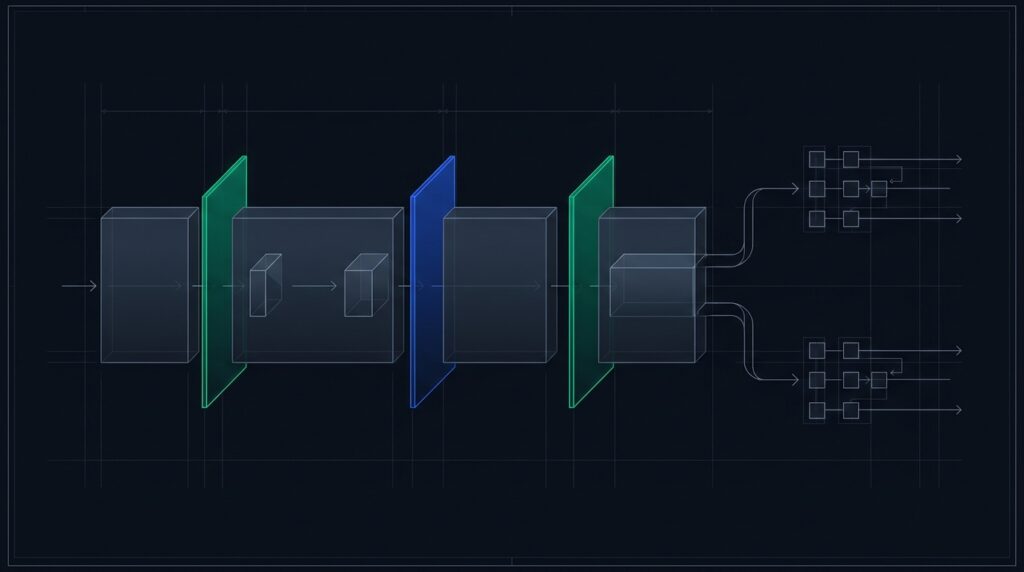
Running deterministic tool-call mock harnesses inside CI intercepts malformed payloads, validates enum ranges strictly via JSON Schema, and halts merges whenever safety invariants degrade.
Architectural Mechanics & Reference Implementation
Mock harnesses record trace snapshots of model reasoning alongside tool parameters so reviewers audit edge-case shifts visually inside PR comments.
{
  "tool": "issue_settlement_refund",
  "required": ["tx_uuid", "minor_units", "audit_ticket_id"],
  "additionalProperties": false,
  "properties": { "minor_units": { "type": "integer", "minimum": 1, "maximum": 500000 } }
}
Verified Operational Benchmarks
Enforcing schema-bounded upper caps and mandatory human-review triggers for destructive actions closed whole classes of autonomous agent errors.
- Primary Delta: 98.9% invalid tool-argument detection before production rollout
- Reliability Gate: Sub-90s automated CI execution time across 180 adversarial tool tests
- Ownership Boundary: 100% client-owned IaC & telemetry pipelines audited by Randeep Kaur
Implementation Checklist
- Enforce additionalProperties: false on every agent-callable function schema.
- Block high-privilege state mutations unless a human confirmation token exists.
- Log every rejected schema attempt to security observability streams.